
FeaturedResume Writing
How to Write a Resume in 2026: The Complete Guide
A step-by-step guide to writing a resume that reads well, passes ATS filters, and reflects who you actually are in 2026.
·22 min read
Practical guides for resumes, cover letters, and the professional URL where your identity lives.
A step-by-step guide to writing a resume that reads well, passes ATS filters, and reflects who you actually are in 2026.
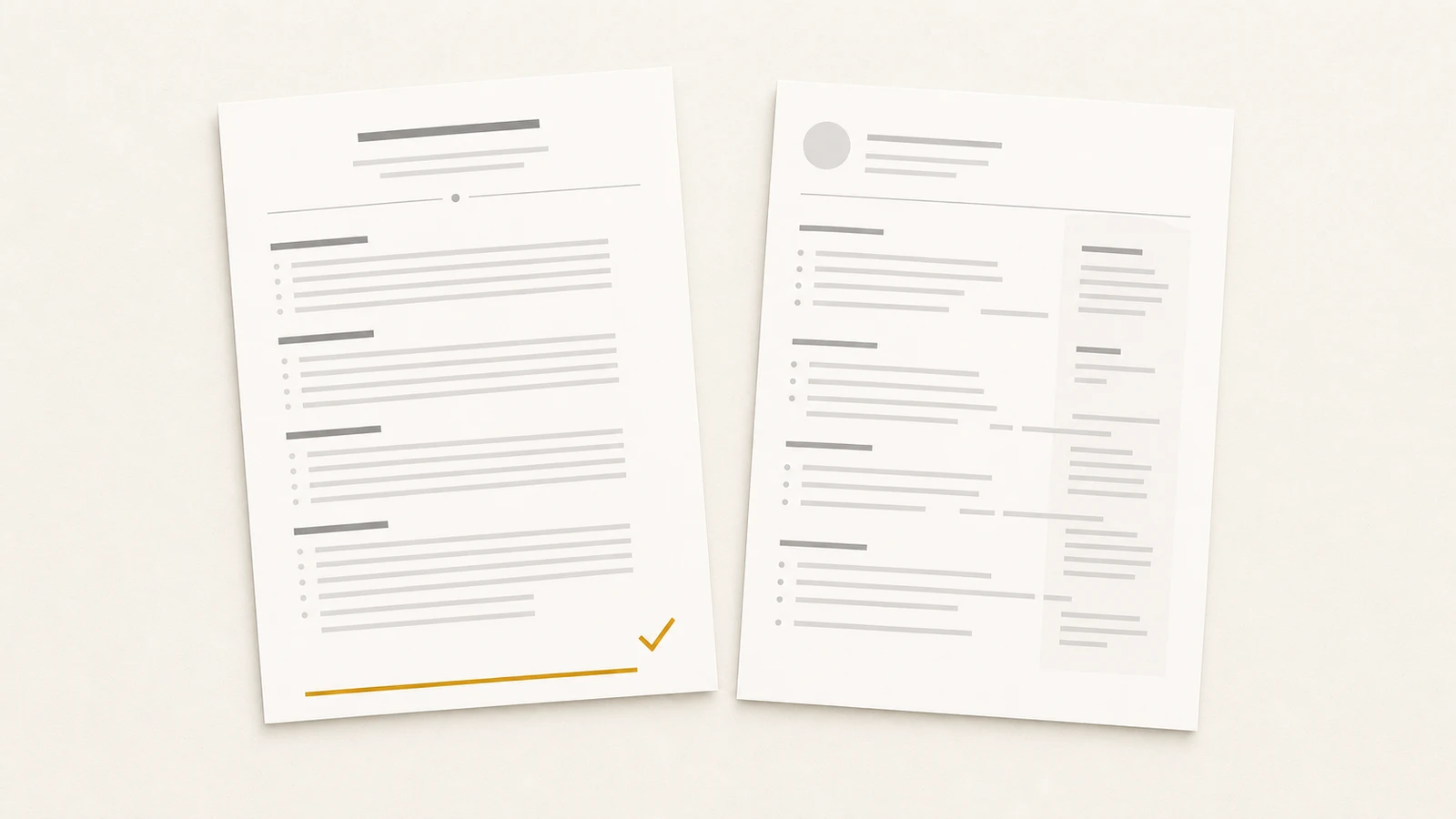
The formatting half of beating an ATS. Which layout, font, heading, date, and export choices parse cleanly, which are risky, and which break parsers outright, with a verdict and a one-line reason for each.
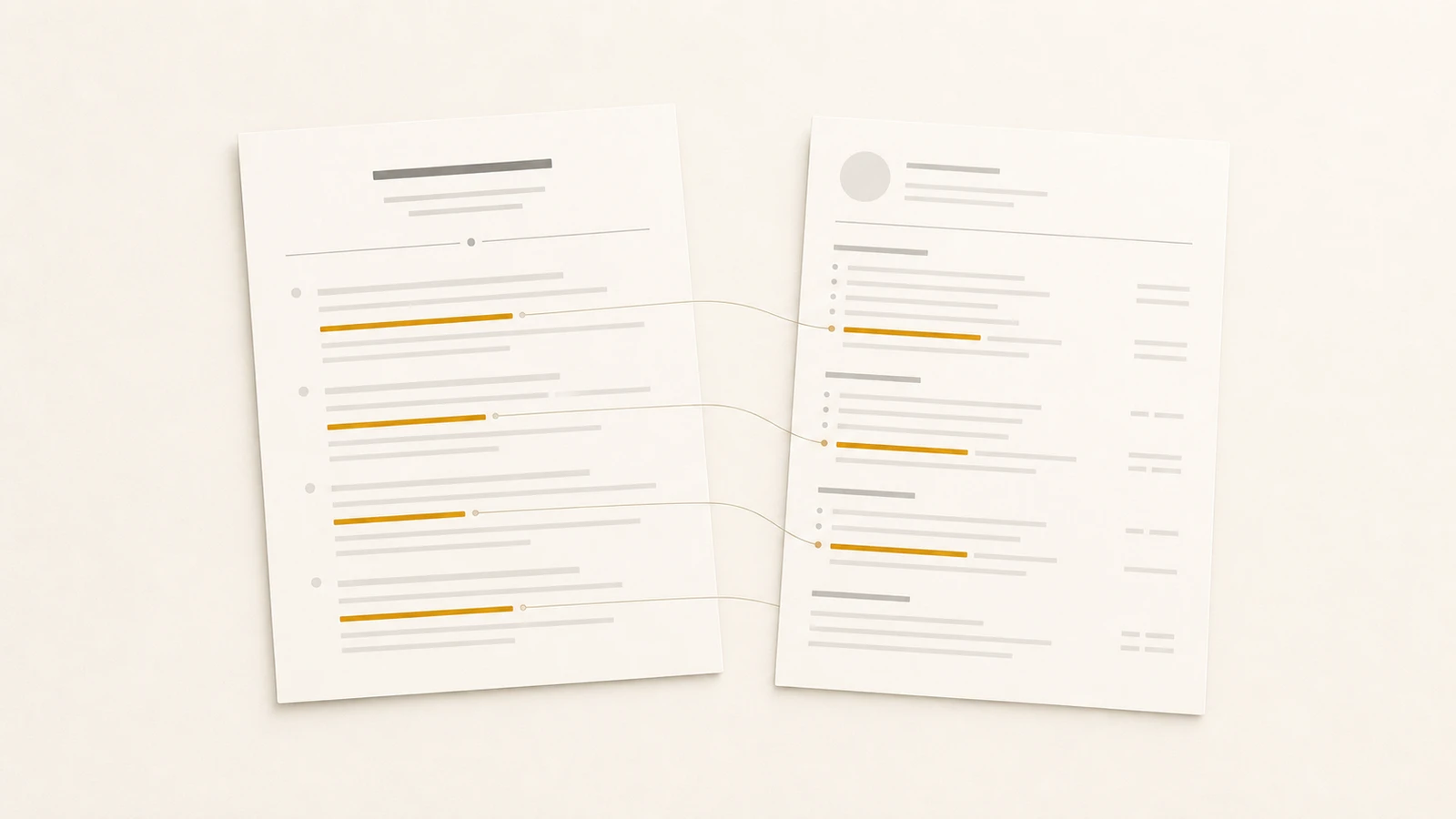
Keyword optimization is necessary and badly misunderstood. How to extract the terms a job description actually checks, where to place them, and why mirroring beats stuffing against an LLM-augmented screen.
Linktree is built for creators, not careers. A professional's comparison of eight identity-page tools on what each carries of your work, whether it exports a resume, and the one job it's right for.
No experience usually means no job title, not nothing to show. How to build a cover letter on school projects, side projects, volunteer work, and internships, without apologizing for the job you haven't held yet.
A referral is the strongest sentence in a cover letter and the easiest to overplay. Where it goes, how to phrase it for a strong versus a thin connection, and when to leave the name out.
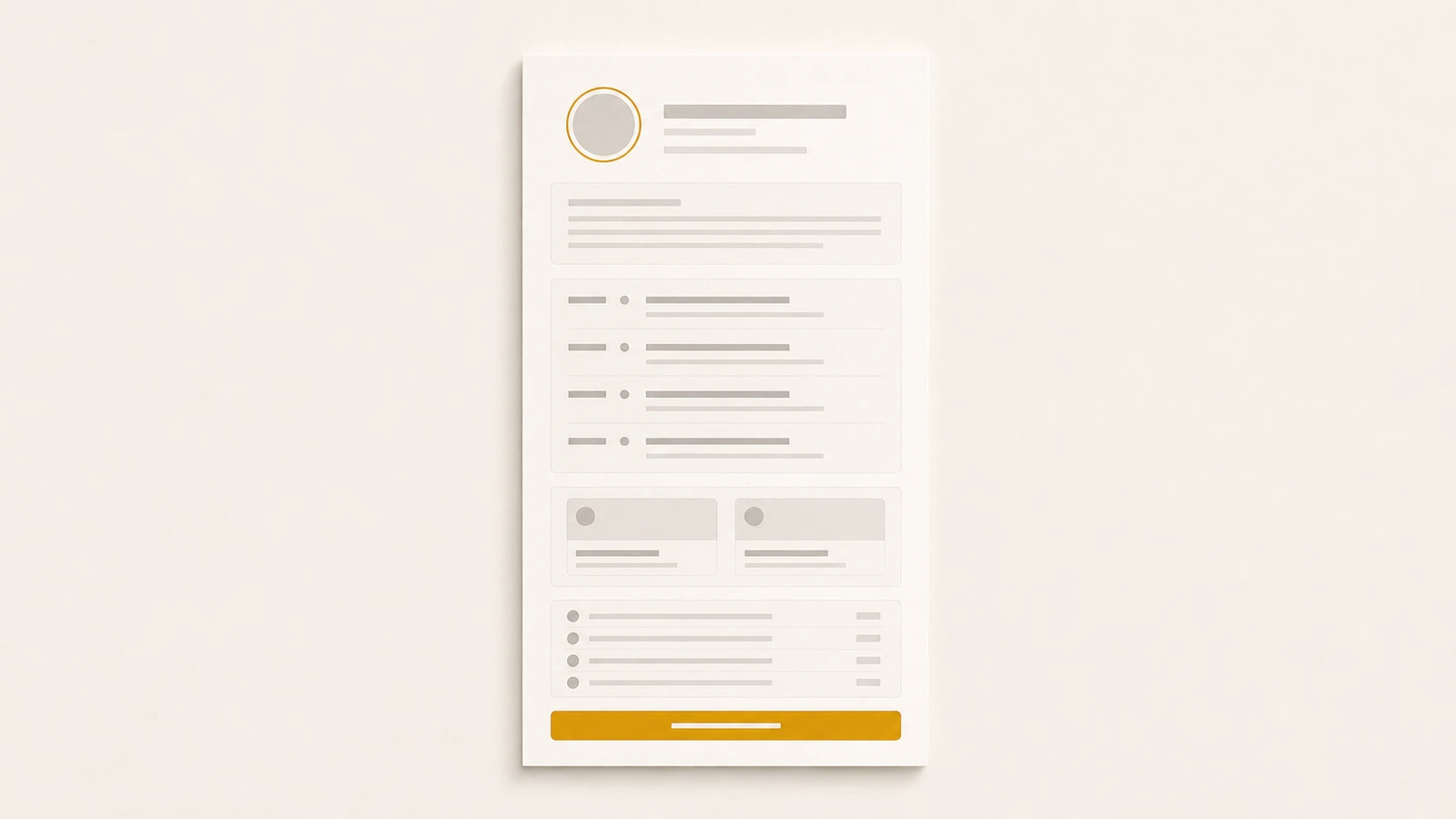
A professional hub page holds your resume, your work, and your links at one URL. How to build one that works: the five parts, the order a reader needs them in, and the conventions for links, examples, and contact.
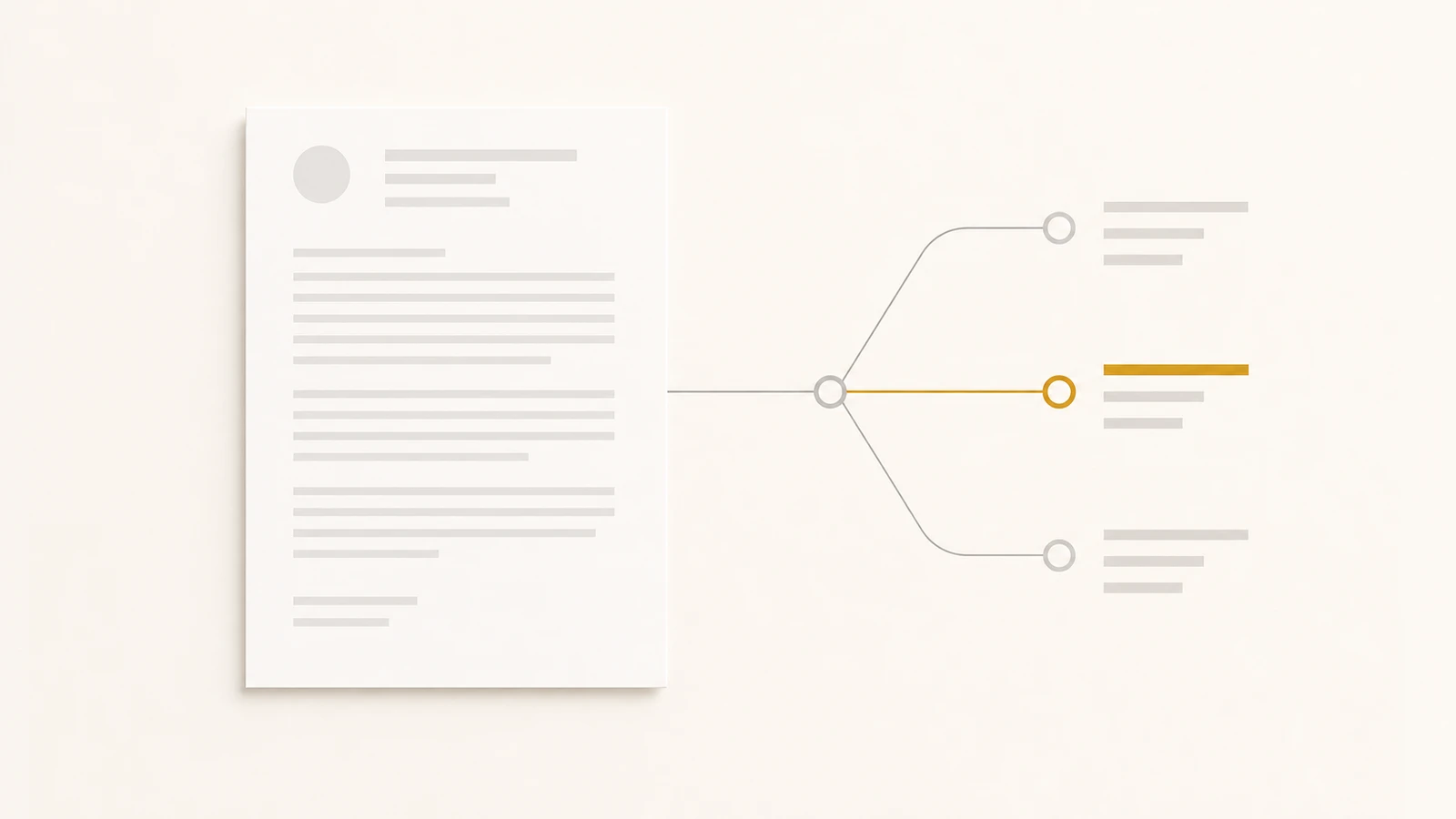
The honest answer is by application type, not yes-or-no. A decision tree across six cases: large-company portal, recruiter-mediated, referral, startup direct-to-founder, government and regulated industries, and internal transfer.
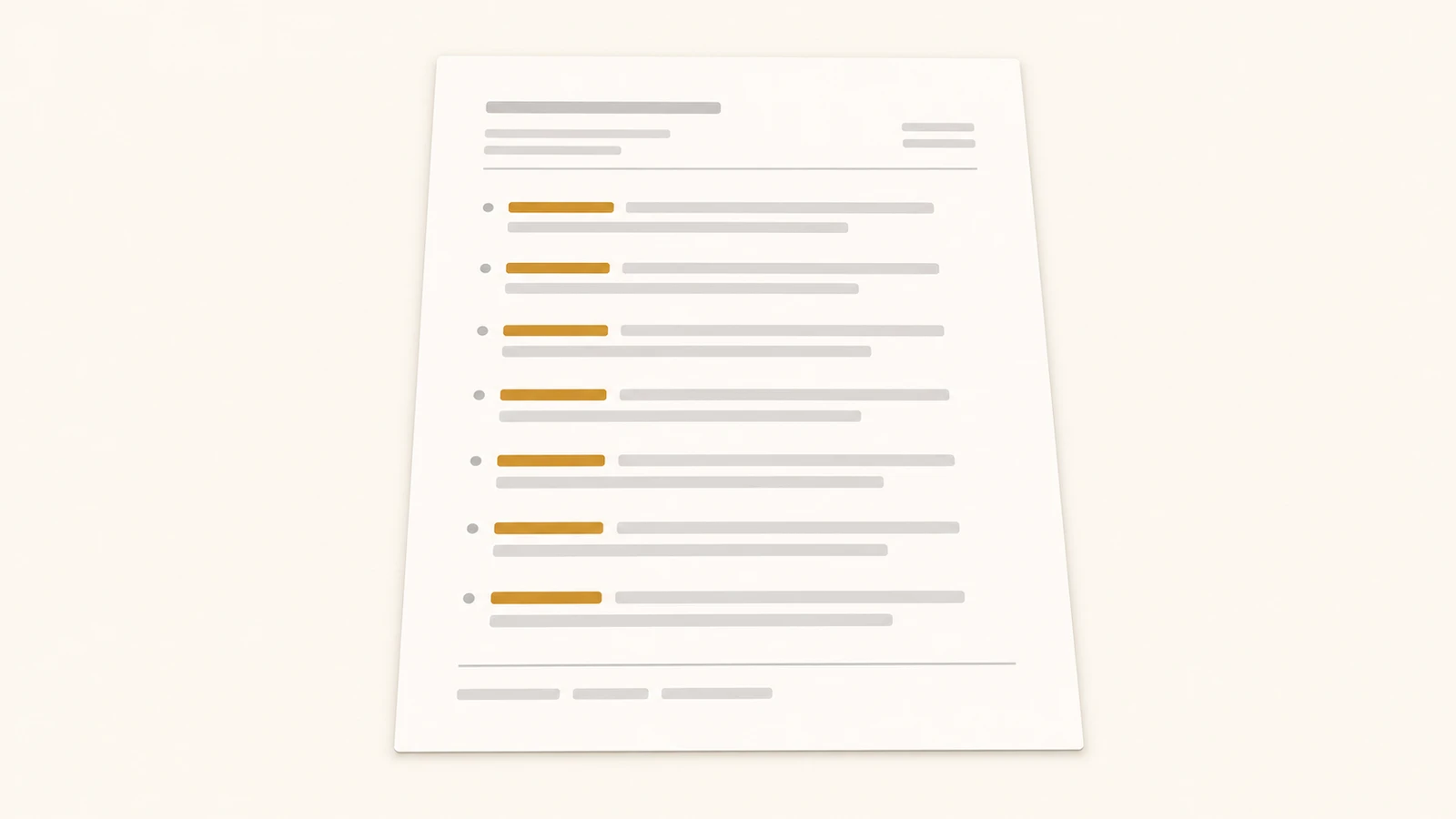
200+ resume action verbs in ten categories: build, ship, lead, measure, design, hire, sell, scale, decide, and repair. One rule per category. 30+ example bullets showing the verbs open real work.
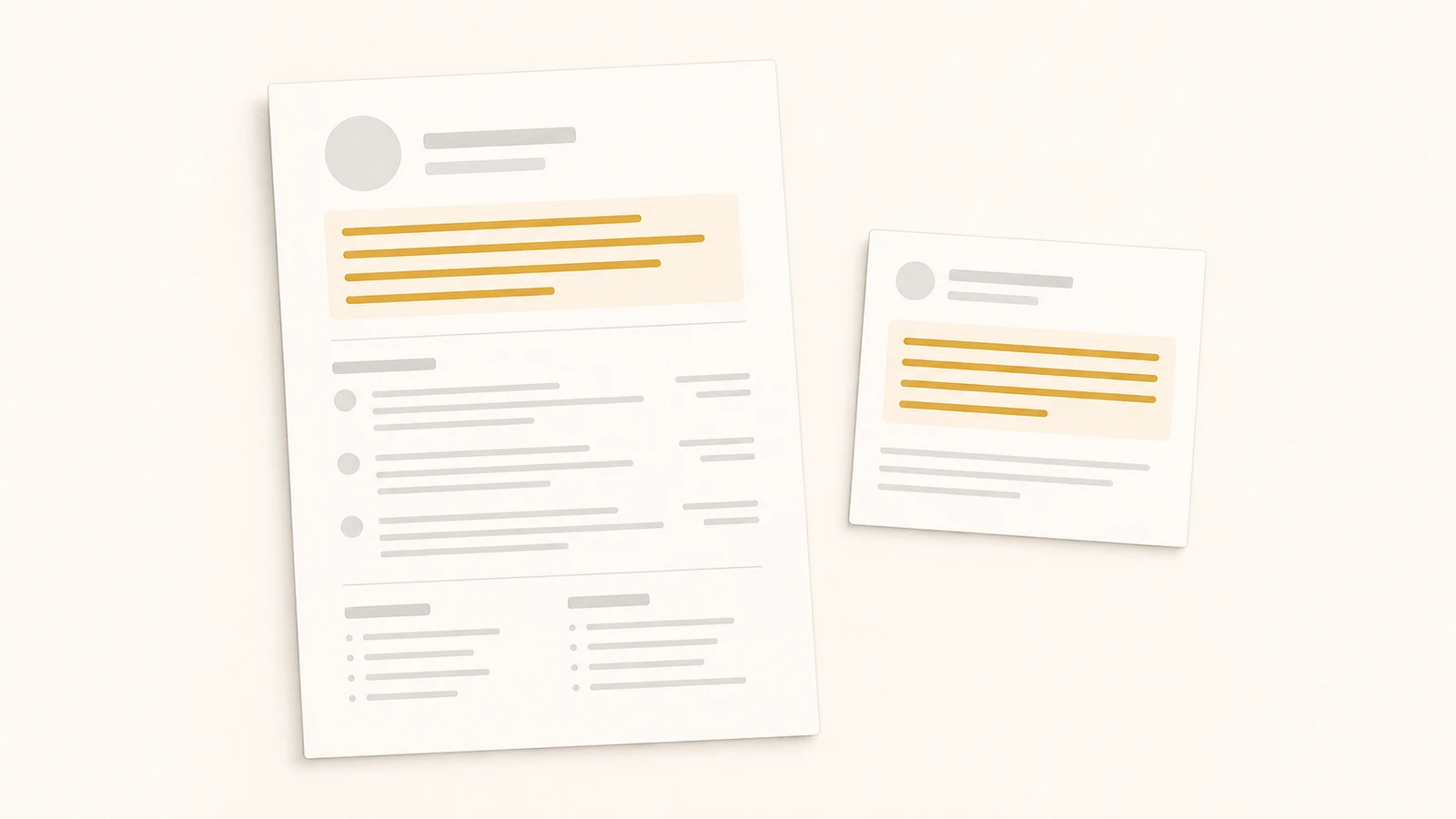
Twelve worked resume summary examples in three sentences each, across roles from software engineering to customer success. Each carries an annotation showing what makes the specifics work.